
SUMEDU
Learning should change what people can do.
Training has a practical purpose: help someone perform a task with greater understanding and independence. SUMEDU develops learning objectives, guided exercises and reference materials for digital skills and responsible use of AI.

Interior of the Rolex Learning Center at EPFL. Photograph by NAC, 2015. NAC · CC BY-SA 4.0
External editorial reference; not a SUM VISUM facility or project. Credits & changesA closer reading
Learning needs more than a delivery channel.
A useful learning environment supports concentration, access to references, practical work and independent explanation. SUMEDU connects educational infrastructure with multilingual resources and tools whose value can be judged through what people are able to do.
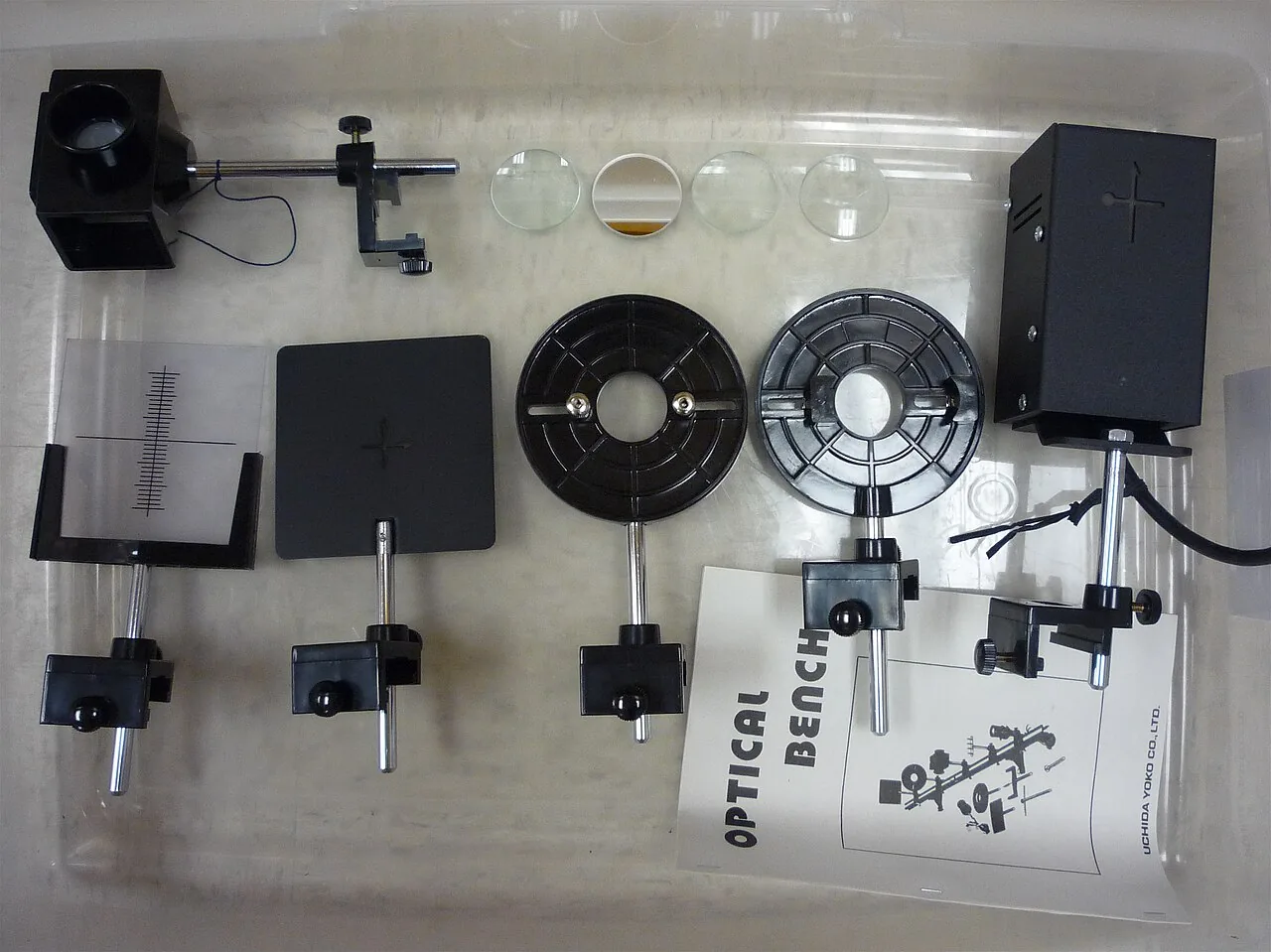
Optical-bench teaching equipment at Cuesta College. Waifer X, 2010. Waifer X · CC BY 2.0
External editorial reference; not a SUM VISUM facility or project. Credits & changesSUMEDU / Professional services
Services and deliverables
01
Digital skills & IT training
Practical workshops on IT fundamentals, workplace tools and safe everyday computing, adapted to participants’ starting level.
- Deliverable
- Agreed workshop plan, practical exercises, learner materials and skills-review summary.
Active professional service
Discuss this service02
AI literacy & professional productivity
Teach task selection, source checking, privacy and review of AI outputs through exercises grounded in participants’ work.
- Deliverable
- Role-specific AI workshop, safe-use exercises and practical productivity guidance.
Active professional service
Discuss this service03
Corporate training & workforce upskilling
Identify skill gaps, design role-specific learning paths and assess practical application. Delivery format and instructors are confirmed before scheduling.
- Deliverable
- Training-needs brief, tailored programme, delivery sessions and agreed learning review.
Active professional service
Discuss this service04
Language & professional communication
Professional English and French learning, bilingual writing and workplace communication, with learning goals and qualified instructor review.
- Deliverable
- Language-needs assessment, workplace communication exercises and reviewed learning materials.
Active professional service
Discuss this service05
Youth technology & future skills
Age-appropriate technology learning and supervised practical activities. Safeguarding, parental permissions and responsible instructors are prerequisites.
- Deliverable
- Age-appropriate programme and exercises only after safeguarding, staffing and consent approval.
Active professional service
Discuss this service06
Learning content & course development
Bilingual learning materials, exercises, course structures and learning-platform projects, with accessible formats and documented content rights.
- Deliverable
- Course outline, bilingual learning assets, assessment activities and platform/content handover.
Active professional service
Discuss this service
Delivery / evidence
Client value and delivery
The customer problem
New digital tools introduced without practical learning objectives or usable materials.
Intended outcome
A learning intervention tied to observable tasks and the participants’ starting point.
How acceptance is agreed
Agree audience, prerequisites and task-based objectives. Review materials for accessibility and language; use a practical exercise and participant feedback to document learning without promising certification.
Delivery prerequisites
Trainer competence, audience suitability, safeguarding where relevant, platform access and material rights must be confirmed. No accreditation or recognized qualification is implied.
Example: learning acceptance rubric
Task: prepare a source-checked AI-assisted summary. Evidence: identify the source, flag an unsupported statement and explain when human review is needed. This sample is not an accredited course or a claim of training already delivered.
01 / Purpose
Make practical knowledge easier to learn, apply and retain.
The operating context
Technology changes faster than many learning environments can adapt. SUMEDU’s remit connects foundational digital skills, AI literacy and future professional capabilities through resources built around learners’ starting points, languages and available tools.
Learning design / practical competence
A task is the point of connection.
A learner should connect a concept to an observable action, explain the result and recognise when help is needed. A multilingual interface cannot replace well-ordered examples, accessible tools or feedback from a qualified educator.
- 01Explain a concept
- 02Perform a task
- 03Review the result
- 04Apply without assistance
02 / Access by design
A learning path that fits the setting.
Mobile-readable material, downloadable references and selected offline exercises can support intermittent study. Language development needs examples that make cultural and practical sense. Assessments must remain usable with assistive technology and cannot assume constant broadband.
Relevant to
- Learners building digital and technical foundations
- Educators, mentors and training organisations
- Enterprises developing workforce competence
- Institutions and multilingual learning collaborators
03 / Domain architecture
Strategic scope describes the division’s field. Products and initiatives have their own development status; no unannounced service or product is offered.
- 01
Technology understood through practice
- Learning briefs cover digital foundations, IT, data, AI literacy and emerging technical skills. Tasks, worked examples and guided projects make competence observable, rather than inferred from time spent watching content.
- 02
Learning systems with continuity
- Structured modules, multilingual reference material and low-bandwidth resources support study across different settings. Clear prerequisites and progression matter as much as content volume. Accessibility must be built into navigation and assessment.
- 03
Personalised support with boundaries
- Research into adaptive practice and learner guidance starts with a defined learning objective. Personalisation must make its assumptions visible, avoid fixed judgements about ability and preserve a teacher’s or mentor’s role.
- 04
Competence must transfer to a real task
- Learning architecture should connect prerequisite knowledge, guided practice, feedback and independent performance. Future technology education can cover digital literacy, infrastructure, data and AI use through practical tasks. Assessment must test what a learner can explain or perform, not merely whether a generated answer appears fluent.
- 05
Personalisation with educational judgement
- Candidate tools adapt examples, explain terminology and retrieve approved learning resources. Educators must review accuracy, progression and accessibility; automated scoring should not determine consequential outcomes without appropriate oversight. Child-facing work needs age-appropriate design and a separate privacy assessment. Multilingual learning requires conceptual equivalence, not only translated menus.
04 / Intelligence in practice
Feedback that supports understanding.
AI research includes practice generation, explanation at different levels and feedback on a learner’s approach. Evaluation must check factual accuracy, pedagogical value and whether assistance replaces the work a learner needs to do. Age-appropriate safeguards, minimal learner data and educator review shape the design.
05 / Evidence & evaluation
From definition to validation
The evidence question is what a learner can do after using a resource. Tests should examine comprehension, independent task completion, accessibility and transfer to practical work, with particular attention to learners underserved by standard formats.
Define the learner, starting point and observable skill.
Prototype tasks, explanations and accessible language versions.
Evaluate independent performance and revise the learning sequence.
06 / Product status
In DevelopmentResearch — learning resources, guided practice and multilingual tools. No accredited programme, awarded qualification, learner account or personalised learning platform is offered by this review.
07 / System relationships
Connected divisions
SUMTECH supplies the practical technology context. SUMMENSA contributes research into feedback and language support. SUM MEDIA connects instructional structure with clear publishing and distribution.



VISIONS INTERLINKED
Your project begins with a conversation.
Tell us the need, the audience and the result you want. Initial contact carries no obligation; terms are agreed before paid work begins.